Indigenous Perspectives & Our Health Promoting Campus
Why this matters
Health is created in the places where people live, learn, work, play, and love. One of the Okanagan Charter's Guiding Principles calls on institutions of higher education to advance health through engagement with—and an informed understanding of—local and Indigenous communities' contexts and priorities. The Charter intentionally pairs local and Indigenous perspectives because both remind us that health is inseparable from place.
Indigenous knowledge systems and worldviews understand humans as part of an interconnected web of relationships among people, the natural world, and past and future generations. From these perspectives, the wellbeing of people, communities, and ecosystems is inseparable and grounds the Charter’s language of "people, place, and the planet" in its fullest meaning.
For Cornell, promoting health extends beyond supporting individual wellbeing. It calls us to steward relationships—with one another, with the lands and waters that sustain us, and with the Indigenous communities whose histories, knowledges, and futures are forever tied to the places in which the university learns, works, and grows. This work is grounded in respectful, reciprocal relationships that prioritize which knowledge sharing, community benefit, and advancement of health.
This place "on the hill"
Every Health Promoting Campus is shaped by the place it calls home. At Cornell, that begins with understanding the history and living reality of the land on which the university stands and respecting the time-honored connections of those who have called it "home" for much longer.
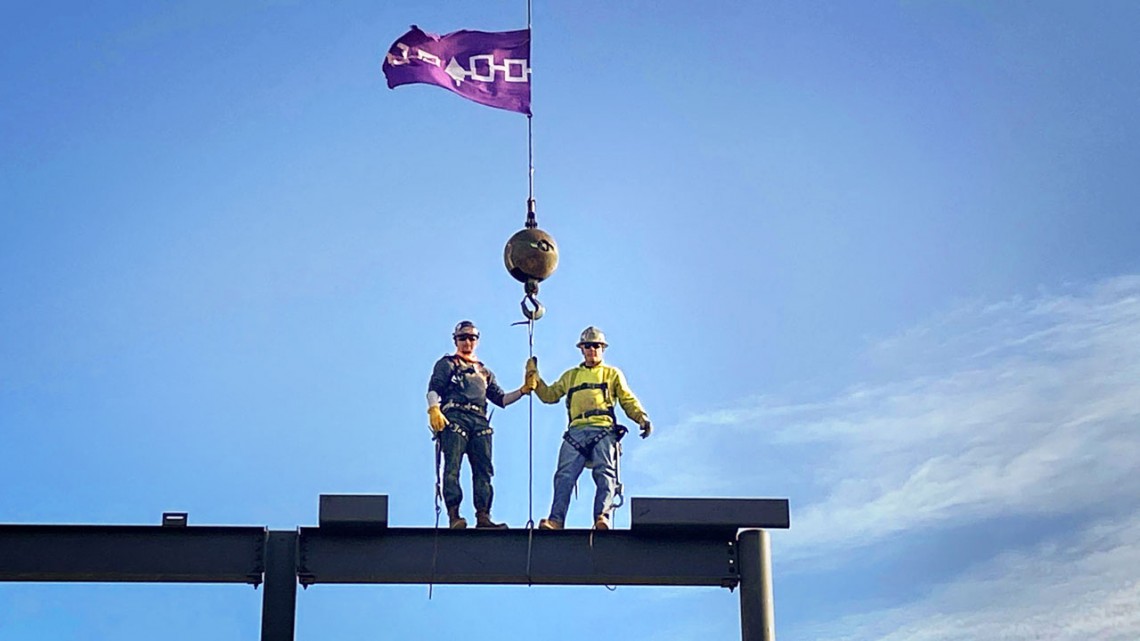
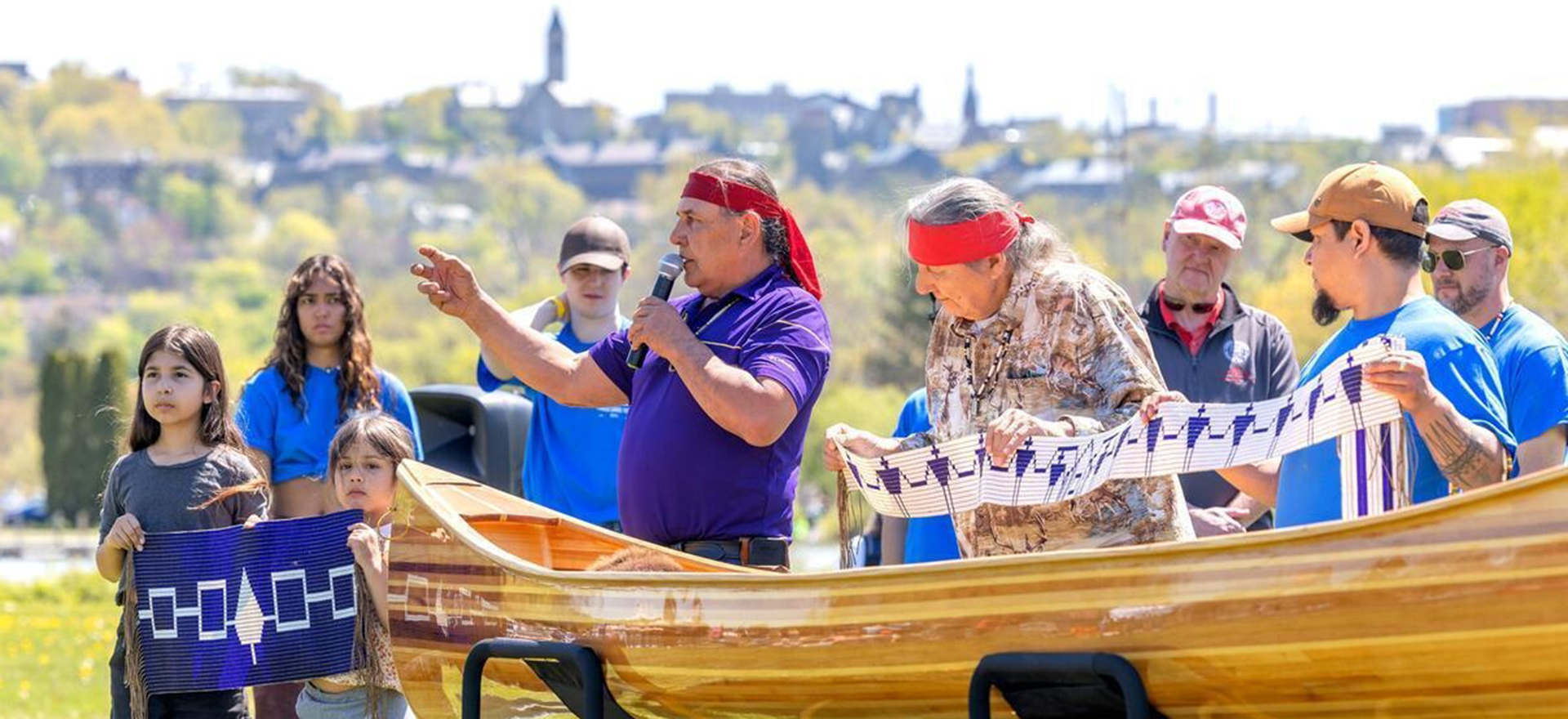
- As recognized in Cornell University's Land Acknowledgment, Ithaca, New York—the site of Cornell's main campus—is the traditional homelands of the Gayogo̱hó:nǫʼ (pronounced "Guy-yo-KO-no;" and also referred to as the Cayuga Nation), one of the six sovereign Nations of the Haudenosaunee Confederacy. For approximately 13,000 years, Gayogo̱hó:nǫʼ people have cultivated enduring relationships with these lands and waters.
- The ancestral Gayogo̱hó꞉nǫʼ name for Ithaca's East Hill—the location of Cornell—is Ganędagǫ: (pronounced "Gah-NEH-dah-go" and meaning "on the hill" or "in the hill"). This Indigenous name deepens our understanding of this place and its history.
In recognition of the original name, one of the university residence halls bears the name Ganędagǫ: Hall as a reminder that, despite generations of displacement—including nearly two centuries without a recognized homeland—Gayogo̱hó:nǫʼ people continue to live in and care for this region today.
Our history as a land-grant institution
As one of 121 land-grant institutions in the United States, Cornell’s public mission is to advance the lives and livelihoods of New York State residents through teaching, research, and public service. Unfortunately, the commendable ideals associated with this status coexist with a painful history of dispossession.
The federal Land Grant College Act of 1862 (also known as the Morrill Act) helped establish or fund 52 U.S. universities—including Cornell University in 1865—through the transfer, theft, and sale of Tribal lands. The Cornell University & Indigenous Dispossession Project website documents this history and illustrates the impact on Indigenous communities.
Because the subsequent sales of these lands seeded university endowments, this history of the Morrill Act continues to shape conversations about the relationship between land-grant universities and Indigenous peoples, including the Gayogo̱hó:nǫʼ.
Acknowledging this history does not diminish Cornell's land-grant mission; rather, it deepens our understanding of the responsibilities that accompany the current stewardship of these lands and waters.
Indigenous community at Cornell
Indigenous students, staff, and faculty bring knowledge, leadership, languages, cultures, and enduring relationships with the land that enrich Cornell and shape its future. Today, Indigenous students from Tribal Nations around the globe study at Cornell.
- Cornell's American Indian and Indigenous Studies Program (AIISP) supports this work through its "full-circle approach" to education — working with Indigenous students from recruitment through graduation and return to their community. AIISP is nationally recognized for its exceptional Indigenous student graduation rates and its commitment to cultural belonging and reciprocal relationships with Indigenous communities.
- Part of Housing and Residential Life, Akwe:kon (pronounced uh-GWAY-go) was one of the first residential program house in the nation established to celebrate North American Indigenous cultures. The name Akwe:kon means "all of us" in the Kanyen’kehá:ka (Mohawk) language and, in this spirit, the house provides culturally relevant and supportive living and learning spaces. Wellbeing outlets include seasonal weekly fires, learning through cultural crafts, special guest speakers, and community events.
Indigenous knowledges in action
Indigenous knowledge systems and worldviews illustrate one of the Okanagan Charter's central ideas: lasting improvements in health come from strengthening the relationships and systems that sustain people, communities, and ecosystems. Examples of current efforts at Cornell are focused in the following domains:
- Climate change, community resilience, and biocultural diversity
- Plant sciences, agriculture, and biocultural conservation
- Language revitalization and cultural continuity
- Data science, sustainability, and community partnerships
Global connections
Our responsibility— as individuals and as a community— to engage respectfully with local and Indigenous communities extends around the globe. Through Cornell's campuses and Global Hub partnerships in over a dozen countries, the work of the university intersects many diverse cultural, historical, and Indigenous contexts. Whether in Ithaca, New York City, Rome, Doha, or elsewhere, this Guiding Principle encourages respectful engagement in every place Cornell learns, teaches, and serves.
- Cornell's New York City campus is located within the homelands of the Lenape (Lenni Lenape). Their homeland, Lenapehoking, encompassed Manhattan and much of the surrounding region.
- Cornell's Rome campus is situated within the historic region of Latium, homeland of the Latin peoples and neighboring civilizations, including the Etruscans and Sabines, whose cultures shaped the development of ancient Rome.
- Cornell's medical college in Doha,Qatar is situated within a region whose history has been shaped by longstanding Arab tribal communities that have inhabited and stewarded the Qatar peninsula for centuries.
If you're wondering about the history and Indigenous peoples of the land you are on today, this mapping tool can assist.
Our role
As members of a Health Promoting Campus, each of us—Indigenous and non-Indigenous community members alike—share responsibility for fostering a community where people, places, and the planet can thrive together. This means:
- Listening with humility and openness
- Caring for the lands and waters that sustain us
- Building respectful and reciprocal relationships across communities
- Holding Indigenous knowledges alongside scientific inquiry and other ways of knowing
Together, these commitments strengthen Cornell's capacity to advance health, equity, sustainability, and belonging for current and future generations.
Related Cornell resources
- American Indian and Indigenous Studies Program (AIISP): Provides Indigenous-related academic study, leadership, and student support at Cornell University.
- Akwe:kon (pronounced uh-GWAY-go): One of the first residential program houses in the nation, founded to celebrate North American Indigenous cultures.
- Cayuga Language and Culture: Cornell provides basic language instruction provided in an immersive learning environment, focusing on the relationship of language and culture to plants and growing.
- Ganędagǫ: (pronounced Gah-NEH-dah-go): Read more about this ancestral Gayogo̱hó꞉nǫʼ word for the East Hill-area of Ithaca, NY.